
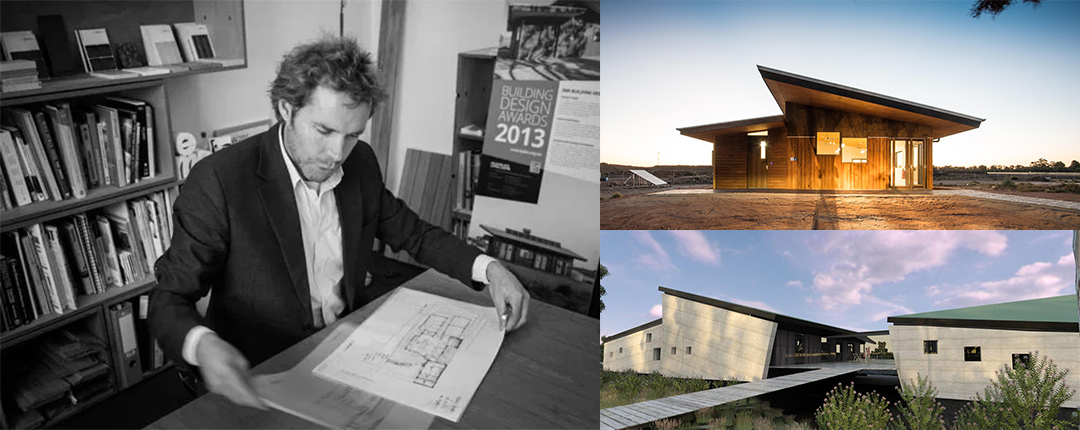
Nearly 10 years since Luke’s interview with The Fifth Estate in 2015, which is ever more important today with the greater appreciation of the priority to reduce embodied carbon, and materials scarcity.
When Luke formed his studio, from day one, the focus has been to produce “Ecologically Motivated Environments”, hence the name EME Design. This vision continues to drive our work today. With evolving technologies, construction methods, and growing awareness of climate-responsive architecture, Luke’s five key principles for achieving affordable and sustainable design outcomes remain a valuable guide for anyone building in a changing world.
Read the full interview to discover practical strategies for achieving sustainable architectural outcomes.
Click here to find interview: Luke Middleton on affordable ways to get sustainable design outcomes
Middleton’s five steps for improving sustainable design outcomes
- Remember less is more – Using less, building less and wasting less is more sustainable. You don’t have to compromise, you can make less space feel like more space. Less is more makes you work harder. It puts you in a position where you have to become more clever or lateral.
- Design is a process of dialogue and exchange – A deep understanding of the cultural and natural context is essential. A building should respond to both its environment and its users to create an enjoyable and sustainable space. The beauty and poetry of good design lies in the sculpting of light, volumes and textures – delightful spaces are naturally comfortable, inviting and elegantly grow old.
- Think optimise and multi-function – In today’s world of excess, help clients to review their brief. Design multifunctional spaces that are adaptable whilst optimising the plan to reduce wasted space.
- Know your product – Don’t be afraid to ask the difficult questions of your consultants or suppliers. Do some research, then ask these types of questions: what is the logic behind the design from a sustainable point of view? What is sustainable about your product? Where is it produced? What is the embodied energy? Chose local products as much as possible.
- Look for a balance between innovation and function and poetry – A common sense approach to design and construction encourages engagement between users and their environment to create projects that above all provide enjoyment, beauty and efficiency.